
Chew Necklaces and Sensory Chews: A Guide for Parents
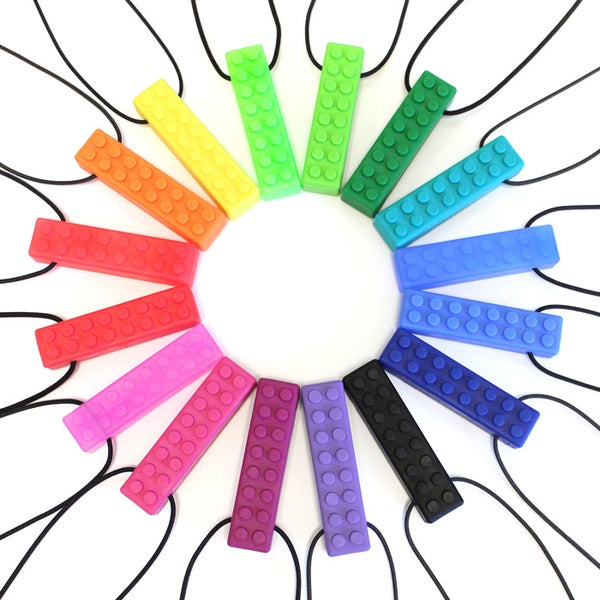
Does your child chew their sleeves, collars, pencils or fingers? Chewing is a common way for children (and adults) to calm down, focus or get sensory input. Chew necklaces and sensory chews give them a safer, more hygienic thing to chew.
Why do some people chew?
Chewing can help some people self-regulate when they’re anxious, overwhelmed or concentrating. Others seek the feeling of pressure in their mouth and jaw. It’s common in children with sensory processing differences, autism, ADHD and anxiety, but lots of people chew. An occupational therapist or speech pathologist can help you understand why your child chews and what will help.
Types of chews
- Chew necklaces: worn around the neck so they’re always within reach. For example, the Brick Stick, Dino Bite, Krypto-Bite Gem and Chewnicorn.
- Handheld chews: like Chewy Tubes, which have a long handle to reach the back teeth and are often used for practising biting and chewing.
- Vibrating oral tools: like the Z-Grabber, which add vibration for extra sensory input. Use these with therapist guidance.
Choosing the right toughness
Most chews come in different toughness levels. ARK chews, for example, come in three:
| Toughness | Suits |
|---|---|
| Standard | Mild chewers who chew occasionally or suck on things like collars and cuffs |
| XT (Xtra Tough) | Moderate chewers who chew harder items semi-regularly |
| XXT (Xtra Xtra Tough) | Avid chewers who chew regularly and intensely |
If your child bites through things quickly, start with a tougher level.
Safety tips
- Choose chews made from medical grade or food-safe materials, free from lead, BPA, PVC, phthalates and latex.
- Chew necklaces should have a breakaway clasp that releases if pulled.
- Supervise use, especially with younger children.
- Check chews regularly and replace them if they show wear, cracks or bite marks.
- Wash chews regularly. Many are dishwasher safe; check the product instructions.
- Chews are not toys, and no chew is indestructible.
When to see a therapist
If chewing is affecting your child’s teeth, skin, eating or daily life, or you’re not sure what they need, talk to an occupational therapist or speech pathologist. They can recommend the right tools and strategies.
Try before you buy. Want to see chews in person? Visit our Hindmarsh showroom, or shop sensory products online.
Chew necklace FAQs
At what age can a child use a chew necklace?
Always check the manufacturer’s guidance. Some chews are not recommended for young children, for example Chewy Tubes are not recommended for children under 5. Supervise children when they’re using any chew.
How long does a chew necklace last?
It depends on how hard your child chews. Check chews regularly and replace them when they show signs of wear.
Can adults use chew necklaces?
Yes. Many teens and adults use discreet chew necklaces to help them focus or stay calm.
Can I buy chews with NDIS funding?
Chews are low-cost items that may be bought with NDIS funding for low-cost assistive technology, depending on your plan. Learn how to pay online with the NDIS.
Find the right chew
Sensory products
Shop chew necklaces, Chewy Tubes and oral sensory tools.
Shop sensory products