

Shower Stool vs Shower Chair vs Commode: Which Do You Need?
Showering and using the toilet safely are two of the biggest parts of staying independent at home. But shower stools, shower chairs and commodes look similar, and it is not always obvious which one you need. This guide explains the differences, what to measure, and how to choose.
The short answer. If you can sit up on your own and just need a rest, a shower stool is usually enough. If you need back support or arms to push up from, choose a shower chair. If getting to the shower or toilet is the problem, a shower commode on wheels may be the answer. If the toilet is too low, an over-toilet frame raises the seat and adds arms.
Shower stool vs shower chair vs commode at a glance
| What it is | Best for | Things to check | From | |
|---|---|---|---|---|
| Shower stool | A seat with legs and no back. Some have arms or a swivel top. | People who can sit unsupported and just need to rest while they shower. | No back support. Check the height range and weight capacity. | $95 |
| Shower chair | A shower seat with a backrest, and often armrests. | People who tire quickly, need back support, or need arms to push up from. | Takes up more room in a small shower recess. | $183 |
| Fold-up shower seat | A seat fixed to the shower wall that folds up when not in use. | Small or shared bathrooms where a free-standing seat gets in the way. | Must be installed into a strong wall. | $199 |
| Shower commode | A wheeled chair with a cut-out seat. Use it in the shower and roll it over the toilet. | People who can’t walk safely to the shower or toilet, or need a carer to move them. | Needs a level, step-free shower. Higher-cost models usually need a therapist’s assessment. | $1,283 |
| Bedside commode | A static chair with a removable bowl, used beside the bed. | Night-time toileting when getting to the bathroom is hard or unsafe. | Not for use in the shower. | $462 |
| Over-toilet frame | A frame with a seat and arms that sits over the toilet. | People who find it hard to lower onto or stand up from the toilet. | Measure the toilet height and the space around it. | $109 |
“From” prices are NovitaTech prices at the time of publishing.
Shower stools
A shower stool is the simplest option: a seat with legs and no backrest. It suits people who can sit up and balance on their own, but find standing for a whole shower tiring or unsteady. Stools are compact, so they fit most shower recesses, and the seat can be turned so you can face the water.
- Basic stools: the Redgum Space Saver Round Shower Stool is height adjustable, has a storage shelf and takes up to 180 kg.
- Swivel stools: the Delta S34 Swivel Shower Stool has a padded seat that turns, so you can face the water or the taps without shuffling. It suits users up to 125 kg.
- Stools with arms: the Aspire Adjustable Shower Stool with Arms gives you something firm to hold when sitting down and standing up. It has push-button legs and a 175 kg safe working load.
- Heavy duty and bariatric: the Heavy Duty Shower Stool takes up to 159 kg, and the Aspire MAXI Shower Stool has an adjustable width, padded seat and arms, and a 310 kg safe working load.
Browse all shower stools and chairs.
Shower chairs
A shower chair adds a backrest, and often armrests. Choose a chair if you get tired sitting up, have poor balance or core strength, or need arms to push up from. The trade-off is size: a chair needs more space than a stool.
- Everyday shower chairs: the Aspire Height Adjustable Shower Chair has push-button legs, a contoured seat and a 200 kg safe working load. The Heavy Duty Shower Chair has a seat height of 445 to 545 mm and takes up to 159 kg.
- Chairs with removable arms and back: the Redgum Transfer Shower Chair lets you take the armrests and backrest off, which can make sideways transfers easier.
- Fold-up wall seats: the Liberty Fold Up Shower Seat folds flat against the wall, so the shower stays clear for other people. It is rated over 150 kg when installed into brick or masonry, or across multiple wall studs, so it needs to be fitted properly. A version with a fold-down leg adds extra support.
- Bariatric chairs: the Aspire MAXI Shower Chair has a seat width that adjusts from 575 to 775 mm and a 310 kg safe working load.
Commodes
A commode is a chair with a toilet seat cut-out. There are two main types, and they solve different problems.
Shower commodes (mobile commodes)
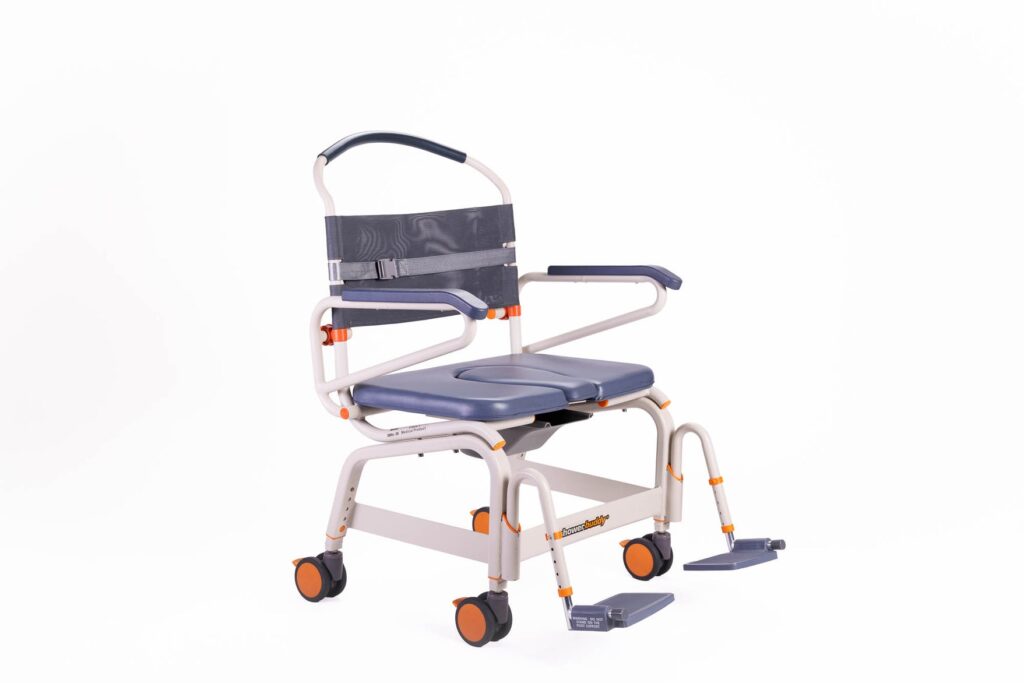
A shower commode has wheels and a cut-out seat. A carer can wheel you from the bedroom to the shower, and the commode can be rolled over the toilet, so one chair does both jobs and you transfer less often.
- Attendant-propelled: pushed by a carer, such as the Juvo Attendant Propelled Mobile Shower Commode, with a stainless steel frame made for wet areas.
- Self-propelled: larger rear wheels let the user move themselves, such as the Juvo Self Propelled Mobile Shower Commode.
- Tilt-in-space: the seat tilts back to support people with limited sitting balance or high support needs. The Aspire Tilt and Recline Shower Commode has 0 to 35 degrees of gas-assisted tilt and an adjustable backrest.
Shower commodes work best in a level, step-free shower. Because they are a bigger investment and need to fit both the person and the bathroom, an occupational therapist usually assesses and recommends the right model. Browse mobile shower commodes.
Bedside commodes
A bedside commode is a static chair with a removable bowl. It sits next to the bed for night-time toileting, when getting to the bathroom is slow or risky. The Aspire Deluxe Bedside Commode has padded arms, a fold-away padded seat and a removable bowl with a lid and carry handle. Bedside commodes are not designed for use in the shower.
Toilet aids: over-toilet frames, surrounds and raised seats
If sitting down onto the toilet or standing up again is the hard part, a toilet aid can raise the seat height, add something to push up from, or both. This is common after hip or knee surgery, or for anyone who finds bending difficult.
- Over-toilet frames sit over the existing toilet and give you a higher seat and two armrests. Options include the Over Toilet Aid with Seat and Splash Guard (powder-coated steel, push-button height adjustment), the rust-proof aluminium Over Toilet Frame with Seat, the Aspire Light Weight Over Toilet Aid, and the bariatric Aspire MAXI Over Toilet Aid (310 kg, padded flip-up seat).
- Toilet surrounds give you arms without changing the seat. The Height Adjustable Steel Toilet Surround is height adjustable and takes up to 160 kg.
- Raised toilet seats add height without arms. The Toilet Seat Raiser Donut sits on the toilet bowl and has a removable lid.
- Grab rails fixed to the wall are a permanent alternative to arms on a frame. See our grab rails.
Browse all toileting aids.
How to choose: what to measure and check
- Measure the space. Measure the shower recess (width and depth), any hob or step at the entry, and the doorway if you are considering a commode on wheels. For toilet aids, measure the toilet height and the space on each side.
- Get the height right. When you sit, your feet should rest flat on the floor with your knees at about a right angle. Most stools, chairs and frames are height adjustable, so check the range.
- Check the weight capacity. Every product lists a safe working load or maximum user weight. Choose one comfortably above the user’s weight.
- Decide on back and arm support. Arms help with sitting down and standing up. A backrest helps if you tire easily or have poor balance.
- Think about who is helping. If a carer helps with showering, think about their access too. Removable arms, a swivel seat or a mobile commode can make their job safer.
- Ask for an assessment. For anything beyond a simple stool or toilet frame, an occupational therapist can assess your bathroom and recommend the safest option, including grab rails or other home modifications.
See them in person. Visit our Hindmarsh showroom in Adelaide to compare shower stools, chairs, commodes and toilet aids, or call (08) 8424 6160 for advice.
Funding
Shower stools, shower chairs and toilet frames are usually low-cost assistive technology. NDIS participants can often fund them from their plan when they support their goals, and self-managed and plan-managed participants can choose Pay using NDIS Funds at checkout. Higher-cost items such as tilt-in-space shower commodes usually need a therapist’s assessment and a quote. Aged care (Support at Home) and private purchase are also options.
Shower stool, shower chair and commode FAQs
What is the difference between a shower stool and a shower chair?
A shower stool has no backrest, so it suits people who can sit up and balance on their own. A shower chair has a backrest and often armrests, for people who need more support or tire easily. Stools take up less space; chairs give more support.
Is a shower chair or a shower stool safer?
Neither is safer for everyone. A shower chair gives more support for people with poor balance or low strength. A stool is fine for people with good sitting balance and is easier to fit into a small shower. Armrests on either help with sitting down and standing up.
Can I use a shower chair as a commode?
No. A shower chair has a solid seat. A shower commode has a cut-out seat and wheels, so it can be used in the shower and positioned over the toilet.
What is the difference between an over-toilet frame and a raised toilet seat?
An over-toilet frame stands over the toilet and has its own seat and armrests to push up from. A raised toilet seat sits on the toilet bowl and adds height, but has no arms.
What height should a shower chair be?
Set the seat so your feet rest flat on the floor and your knees are bent at about a right angle. Most shower stools and chairs have height-adjustable legs.
Do I need an occupational therapist to choose a shower chair or commode?
For a simple shower stool or toilet frame, often not. For shower commodes, tilt-in-space chairs, or if you have a high risk of falls, an occupational therapist assessment is recommended and may be needed for funding.
Can the NDIS fund a shower chair or commode?
Often, yes, if it supports the goals in your NDIS plan. Shower stools, chairs and toilet frames are usually low-cost assistive technology. Higher-cost items such as tilt-in-space shower commodes usually need an assessment and a quote.
Find the right bathroom aid
Shower stools and chairs
Compare shower stools, shower chairs, commodes and toilet aids in our Hindmarsh showroom, or shop online for delivery Australia-wide.
Shop shower stools and chairs